Image provided courtesy of Maya C. Popa We often associate wonder with extraordinary experiences, moments of beauty or awe that stop us in our tracks. But what if wonder is also a way of paying attention, one that invites us to question what we think we know and remain open to what we cannot immediately understand? Poetry offers a particular way of exploring this possibility. It asks us to slow down, look more closely, and make room for ambiguity, uncertainty, and experiences that resist easy explanation. In doing so, poetry may have something ...
Zen Blog
My daughter recently drew my attention to a flower. Her invitation to notice offers a simple starting point for this practice: follow a child’s attention and allow yourself to discover what they see. A flower, sounds in nature like a bird’s song, or sunshine moving across a leaf can become a meeting place between generations. In my work with Ivy Child International, I call this reciprocal teaching and learning, anchored in trust, the Mindfulness Multiplier Effect™. WONDER brings that spirit into our relationship with the living world. Awareness...
The key to belonging may be more within your reach than you think. You don’t need to become more interesting, more confident, or less awkward. You may simply need to become more psychologically flexible. Psychological flexibility is your capacity to stay present, open to your inner experience, and engaged with what matters to you—even when things feel uncomfortable. Researchers have been studying this capacity for decades, and it turns out that when you are more psychologically flexible, you are not only less likely to struggle with anxiety and...

Sometimes the hardest thing about having a mindfulness or meditation practice is just making time. With 24 hours in a day, things to do, places to be, people who need us, things we need to take care of, we all ask ourselves, how do we make time? What I found is I can’t overthink it or it won’t happen. Take a deep breath right now. That’s the practice. Imagine if every day you found moments to breathe, to reflect, to be more present. As you pause to take one of those deep breaths, maybe you’re already reflecting on how you’re showing up in the ...
Our guest this week is Shamash Alidina. He offers a guided practice to invite us to consider how feeling smaller can actually be a big relief. It’s not that we diminish our value, but rather that we take a moment to feel that the world is bigger than our worries, and that we are held and surrounded by immense beauty, wonder, and support. In this meditation, you’ll: Connect with and ground in your senses and your bodyWiden your perspectiveOpen yourself to the experience of awe Read and practice the guided meditation script below, pausing after ...

Fear is a part of everyday life. It’s always lurking around, threatening us, horrifying us, on bad days crippling us, and on good days simply annoying us. There are the mega-fears, both real and imaginary: that someone is following you when you walk alone at night, or that the headache you’ve had for two days actually indicates that something is horribly wrong. More common are little nagging fears that keep you awake at night, eat away at you, and prevent you from experiencing the day around you. How do we work through all of these sources of a...
Tap, tap, tap. I’m typing away in a café in North London. Outside, the sky is grey. Around me, people are ordering drinks, looking at their phones and talking through problems with colleagues. There must be about twenty of us in here, each with something on our minds. I have my own concerns. There’s a pile of admin waiting for me, and I’m not especially keen to get on with it. I stop typing and look around. Each person has a life as complicated as mine. Someone might be worrying about money. Someone else might be looking forward to seeing a fri...
Our guest this week is Dr. Diana Hill. She brings a guided practice to be with, care for, and notice the story that we bring to our emotional and physical pain. In this meditation, you’ll: Identify a specific area of discomfortName the story underneath that pain, without judgment or the need to “fix”Notice how the story points to what you care about, and what’s most important to youConsider how you can act on that care Diana Hill, PhD is a clinical psychologist, international trainer, and sought-out speaker on Acceptance and Commitment Therapy...
Life is hard, and it might get harder. So, where could mindfulness or loving awareness fit in when survival feels tenuous and ultimately temporary? Recently, I listened to a good friend sharing painful accounts of his health crisis, the loss of his sister to cancer, and how his work is suffering as a result. It all sounded pretty grim. I could sense his anxiety and distress, so I told him that sometimes I cheer myself up with this image: It’s like we’re on the Titanic and we’re all going down, but it’s ok because we have our arms around each ot...
At 8:45 on a Wednesday morning, I discovered that I had made a fundamental error. I was about to spend the day without my phone, and my first thought was, Well, this is easy. I’ll just make notes on my phone as I go. Doh. The experiment had barely begun and I was already negotiating with my phone.
If you’ve ever felt anxious after making a big decision, you’re not alone. There are psychological and physiological factors that may help explain why anxiety sometimes lingers even after a decision feels right. Here are some possible explanations, along with mindfulness practices that may help you navigate the uncertainty. Some people expect an instant sense of calm after they’ve made the “right” choice, but that’s not always how the brain and body respond. When you make a decision, such as changing careers or setting a firm boundary, the str...
There is one sentence that can stop attempts to repair a tumultuous or estranged parent/child relationship in its tracks. For many, this experience may sound achingly familiar: An adult child is naming a painful experience from their youth, often something a parent said or did that hurt them. They are typically hoping to share the truth of their experience and be met with compassion, accountability, and perhaps an apology or steps toward repair. “That never happened,” their parent says. Or, a slightly softer “I don’t remember that,” fills the ...
I used to hear the phrase “you need to be single to work on yourself” and find it almost offensive, as if someone were saying I was too damaged or too complicated to be loved until I fixed myself. Over time, I realized that wasn’t what people meant. Being single isn’t about becoming more worthy of love. Being single isn’t about becoming more worthy of love. It’s about finally having enough space to understand yourself without another person’s emotions, habits, and reactions constantly shaping the environment around you. Because relationships do...
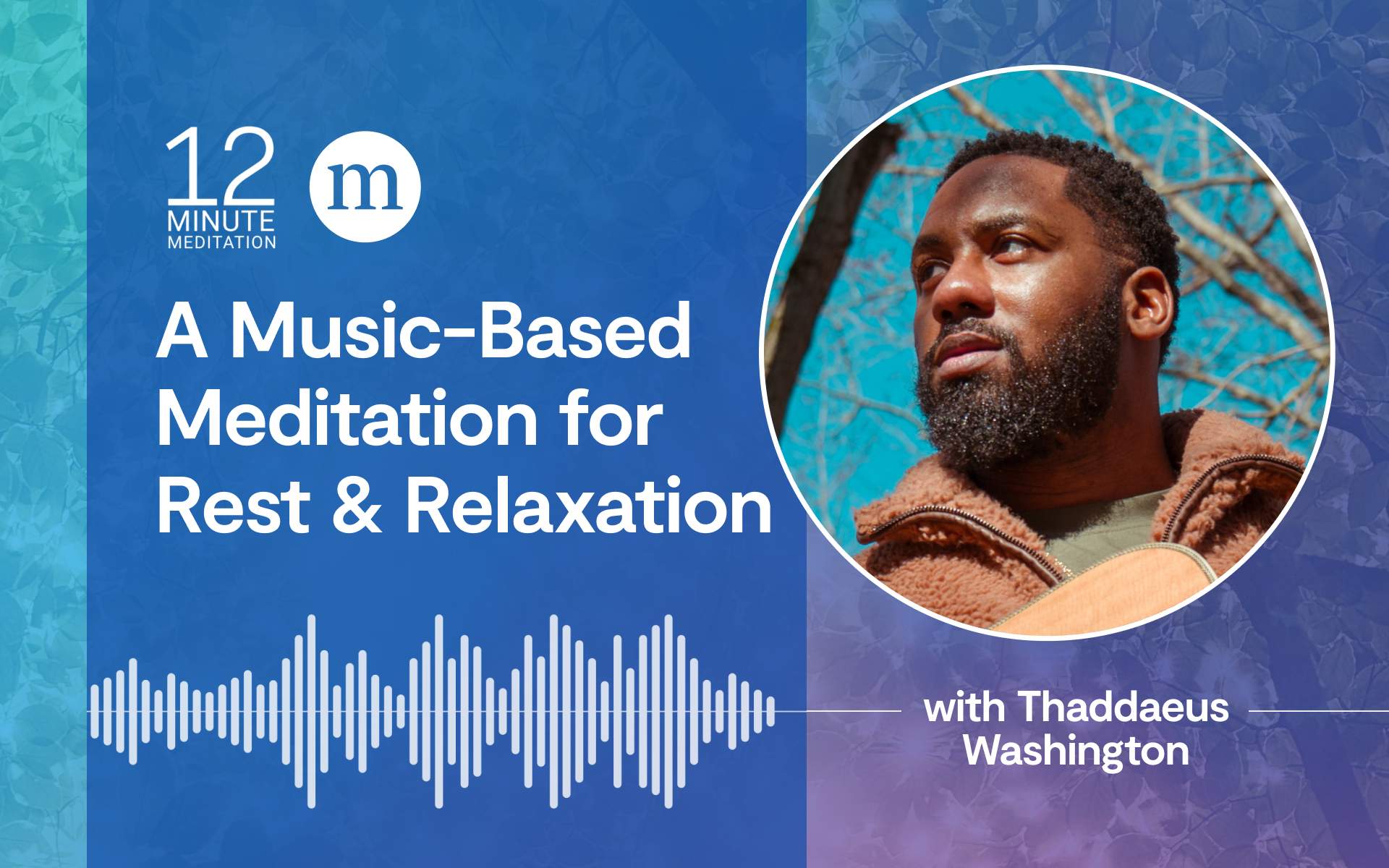
Our guest this week is Thaddaeus Washington, Mindful’s featured Teacher of the Month for October. He brings a new experience to our meditation lineup: a music-based meditation entitled “Vapour,” where sound is the anchor for our attention. Music is the main experience in this practice, with exposition only in the first few minutes. You’re invited to simply rest, bring your whole self, and allow the music to unwind the worries of the day. Learn more about Thaddaeus, his music, his work, and his journey with mindfulness in his featured essay here...
We’ve lost a handful of visionary writers in recent months and years: Mary Oliver, Wendell Berry, and Annie Dillard come to mind for me, among others. These are people who not only inspired me as a writer in my formative years but who also shaped my moral imagination. In each case, learning about their deaths was like watching a giant redwood crack and list and crash into the forest below. Something regal and ancient disappeared from the skyline. These writers were unafraid to be close to things I also longed to be close to: the natural world, ...
Hello, my name is Thaddaeus Washington. My journey to mindfulness started long before I knew what the word meant. I was born to two wonderful parents, Lenny and Linda, and from the very beginning I was a kid full of vigor, energy, spontaneity, and deep curiosity. Eclectic, you could say. I’ve always loved people: getting to know them, wondering what makes them tick, and figuring out what makes things move. When I was four, my parents divorced. It affected me and my sister, Esther, but I can only speak for myself, and for me the effects were maj...
When I was a student at Columbia University Graduate School of Journalism in 2016, I thought it would be a good idea to write about the appropriation of mindfulness by corporate America for my Master’s project. What I discovered during the course of my reporting was a paradox. When I spoke to those who understood Buddhism, they referred to mindfulness as a way of life where simplicity and slowness are important. When I spoke to those who used it at their corporate jobs with multi-national companies, they felt it helped them meet their targets,...
Our days are made up of countless small reactions to the outside world. A short email from a colleague can put us in a bad mood for the afternoon, a criticism from a partner can linger for days, or an ordinary disappointment can suddenly make us question everything. We tend to think the problem is whatever has happened to us: the difficult person, the frustrating job, the argument, the mistake, the uncertainty about the future. But what if some of our suffering comes not only from what happens to us, but also from how we react to it? We tend to...
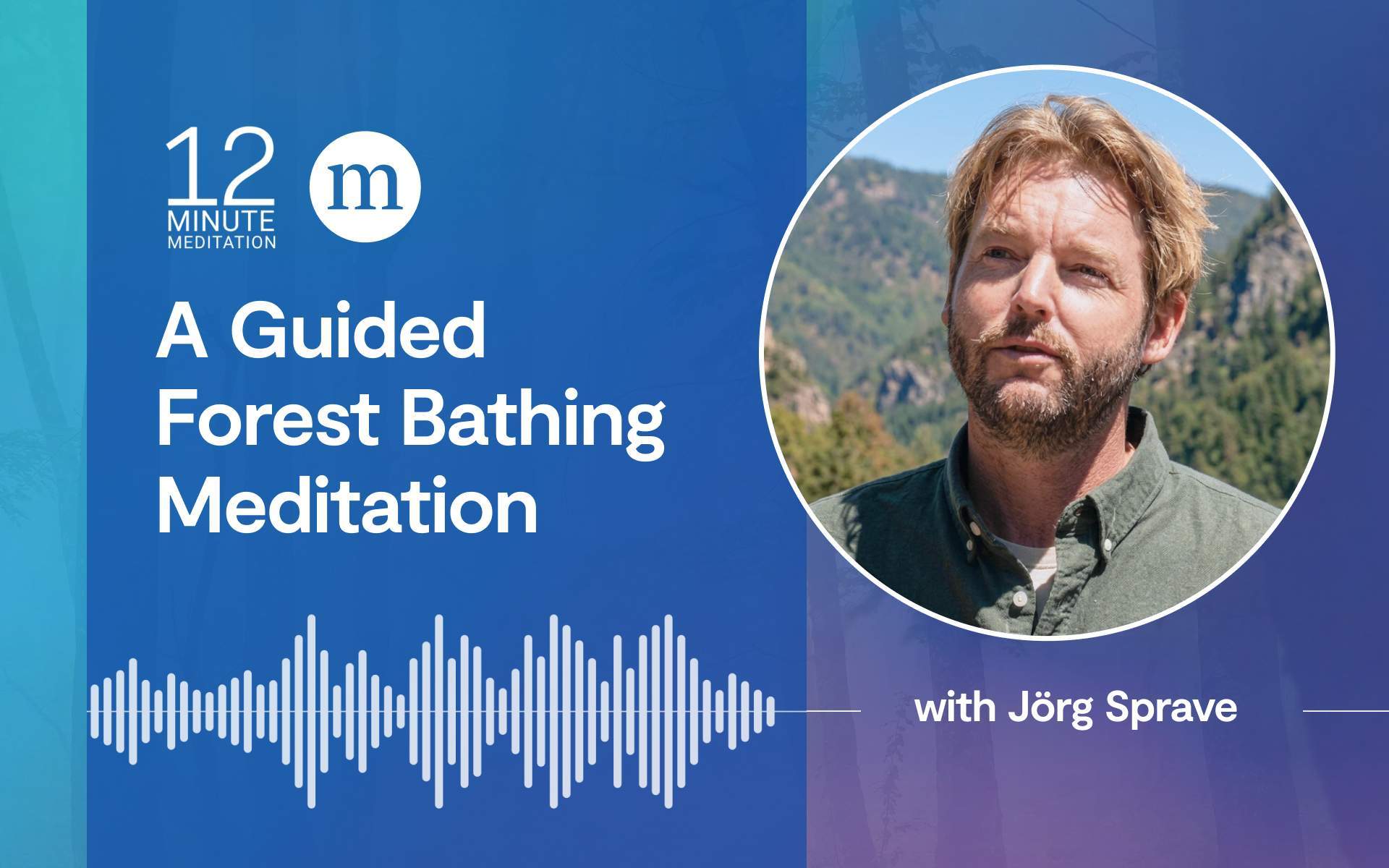
Most of us live our daily lives in environments that are disconnected from nature. We are surrounded by steel, concrete, screens, and the endless noise of modern life. But our minds and bodies long for the rest and awe that can only come from connection with wild, natural spaces—even if those spaces are small, simple, and undramatic. Our guest this week is teacher Jörg Sprave. He leads a guided meditation called “I Am Nature.” Designed to be done outdoors, this meditation is based on the Japanese practice of shinrin-yoku, also known as “fores...
Garden meditation is a simple mindfulness practice that invites you to notice the sights, sounds, scents and textures of the natural world as a way of anchoring your attention in the present moment. You don’t need a beautiful garden, special equipment or a lengthy period of silence. A balcony, a park bench or even a single potted plant can offer a place to begin. In a world where our attention is constantly pulled in different directions, spending a little time outdoors can offer a welcome opportunity to pause and notice what’s around us. The p...